Early Years and Schooldays Reminiscence

Our second reminiscence event.

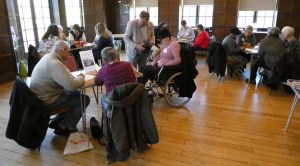
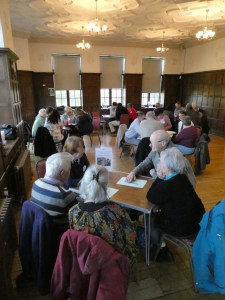
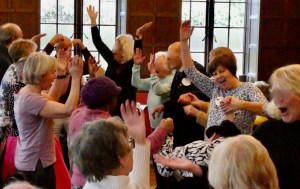
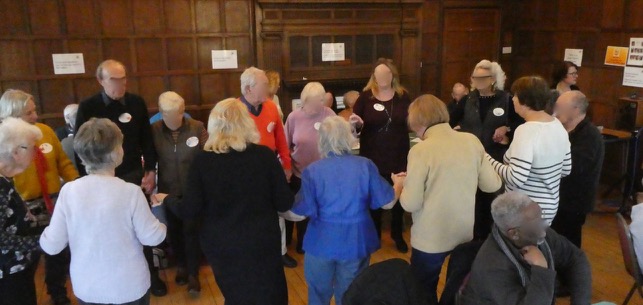
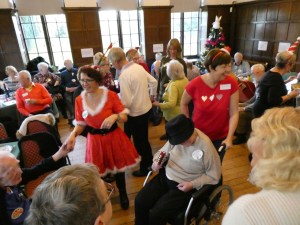
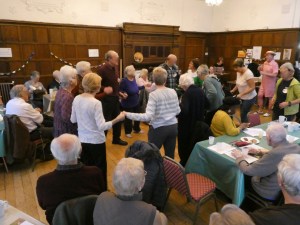
We started chatting in small groups, but had to break for the deportment session. This seemed to be very popular and showed-off the excellent postures of our group.

Next, we discussed where group members had grow-up. Deptford was the most popular location.

Memories of schooldays quickly snowballed in the next session.

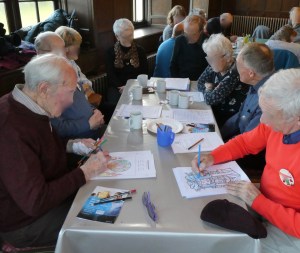
The Tuck shop opened and we had a well deserved tea break

Finally we had the school prize-giving session, led by the rather dapper Head Teacher (me). I must thank our guest speaker, David, for his speech on schooldays – and the road to fame, via sleeping rough!

Next session in February: First Jobs and Friendships


Lots of entertainment, no entertainer

A near record turn-out, but we were sad that our booked entertainer could not come due to his car breaking down! Our wonderful volunteers rose to the challenge and we all had a very good time.

There was plenty of chat, quizzes, jigsaws etc for the first hour or so.

I ran a Dementia Friends session which included group members, volunteers, some people who had signed-up via the DF website and Josie and a friend from Josie’s Keep Fit in Retirement group.

After all that we had some dancing and a singing-a-long.

As our group is becoming so popular, we have the opportunity to make some positive changes in the near future. Watch this space.


Carers’ Group: 14th January

The first Carers’ Group of 2019 proved to be a well attended and emotional event.

We welcomed two new members, including one who comes to our Friendship Group.

Given the numbers we asked for issues that people were keen to discuss, allowing them time towards the end for any additional topics.

Finding good care-in-the-home providers 

A regular subject for discussion, but one that does not have a simple answer. The group suggested using contacts, personal recommendations, searching on-line and reading the Care Quality Commission reports and guidance (see here for their site).

Social Services will complete a care assessment for adult support on request. This is a key first stage in both finding and accessing services, and discovering what financial support (if any) is available. More information here.

A carer also has the right to a carer’s needs assessment on request see here.

If you are being supported by Oxleas NHS Foundation Trust you may find details of their services here. You will see they have a care planning service (mental health) which is separate to the Memory service

When is the right time to look for a Care home?

Group members who have loved ones currently in care homes provided their personal experiences of when “the right time” arrived for them. This is a very emotive subject and members were emotional when discussing this life changing decision.

We had several, very positive, examples of how people had moved into care homes. There still remained a huge burden of emotional issues to deal with for someone who was still alive but “no longer there”.

A helpful perspective was that people in care homes could flourish and also still have days out. If a home did not suit the person they could change it for a different one. It was also possible, for some, to return to their homes.

The emotional impact of sudden changes in a loved one

How do you cope with a situation where someone is fit and healthy and, suddenly, they are rushed into hospital – are later transferred into a care home – and now may never return home? Or, your loved one suddenly becomes extremely threatening and violent and is taken immediately into care?

The group gave members the chance to say how they felt, what it meant to them and how their lives had changed.

We discussed support from family and friends and counselling. 

The NHS have information on counselling here. As this is a “talking therapy” it depends on openness and honesty.

Greenwich carers’ centre (The Stables, at Charlton) provide mentoring and counselling support. More information here.

GPS

And finally, we discussed GPS trackers – see my post here.

 

GPS Trackers

There are a variety of devices that use GPS to locate a person. They could give you greater peace of mind, if your loved one likes to go for a walk. The tracker will link to an app which will enable you to see where they are.

You will need to consider some issues before you buy one. These include:

  • Do you have the person’s consent to use the device? (if they are able to give consent)
  • Is “tracking” in your loved one’s best interest? (not to simply “tag” them for your convenience and who will have access to the information?)
  • Will the tracker be worn? (they come in a variety of forms including – fobs for key rings, watches, and insoles for shoes)
  • Would the device be used? (for example – some have panic buttons)
  • The initial cost (which can be high – see links below)
  • The monthly cost (which may be low, but mounts-up over time)

The Alzheimer’s Society has an article on GPS devices here

You can see a variety of trackers on the atdementia site here

An example of a tracker is below. The atdementia site includes more information. Please note: I have no experience of this tracker and am not endorsing it.


Yepzon Freedom GPS tracker

The Yepzon Freedom is a safety product designed for people who are active in and outside of the home. It uses 3G, wifi and GPS for accurate tracking.

Activity can be monitored through a free and easy to use app which works on any smartphone. One device can be tracked with several phones – meaning you can make your ‘circle of care’ as large or as small as you choose. The personal alarm button, when pressed, will immediately alert those with the app that you have raised the alarm and they can check your location on the app and respond.

The Yepzon Freedom is especially reliable since it does not have a power switch from which it could accidentally be turned off. In addition, the battery life of the device can last for weeks depending on the user-specific settings. Its small, stylish and has a handy attaching mechanism, making easy to attach and take with you anywhere. It is shock and spill resistant.

The product comes with built in SIM and 5MG worth of data (approximately 1 month of average use). There is a cost for the ongoing data according to usage; the app is free to download.

2019 is here!

We enjoyed our first meeting of the new year. Of the 45 attendees, there were some new faces and some older faces (including mine!)

A few of our regulars were absent due to sickness etc etc. Even three of our stalwart volunteers were unable to come. We hope everyone will bounce back for our next meeting on 22nd January.

The quizzes went well, as did the mindfulness colouring.

By the time Tony (the birthday boy) arrived, we were reading for a sing song.

And some dancing.


Next time we have the return of Jamie with some Rock ‘n’ Roll and a Dementia Friends session, hosted by me.

See you then.


Coping with Christmas

Christmas can be overwhelming for many of us but when someone in your family has dementia, this brings different challenges that are very easy to overlook.

Here are some useful tips to think about in the lead up to the festive season (everyone is unique, and you know your family member best, so consider which ones apply).

  • Put decorations up early and slowly. Take a few days or a week so it doesn’t come as a big change to a person’s usual setting
  • Try to spread family visits out, as large numbers of guests and lots of noise can be overwhelming.
  • Create a quiet room, where the person with dementia can go if things get busy. To avoid confusion and anxiety, a cup of tea can be offered away from the bustle and if the loved one wants it, sit with them and chat. Some people with dementia can find large groups overwhelming and can struggle to take part in fast moving conversations. A little separate one-to-one time with family and friends may be better. The person with dementia often values and benefits from gifts of company more than material gifts. The gift of your time is a precious thing.
  • Try to keep a routine — keep meal times at the same time so your loved one can relax, get up and go to bed at the same time
  • Play some familiar old Christmas music and look over old photographs.
  • Photographs can be useful because people with dementia may be living in a different decade. It is common for people to believe they are at a younger point in their lives. If this is the case, use older photos to explain who people are – and don’t get upset if you’re your loved one gets names wrong.
  • Communicate essential changes with family and friends, so they understand what’s going on.Look after yourself and ask for support – a little respite from family and friends can be invaluable so you can enjoy the season too.
  • Think of activities that friends and family can do with the person with dementia and everyone can enjoy.
  • Encourage your loved one to take part in the cooking preparations for Christmas. They will feel useful and it can start conversations about Christmases past (your loved one’s child hood Christmases as well as yours). Reminiscence is vital to increasing wellbeing.
  • At Christmas lunch:hand out crackers when you are going to pull them, limit the amount of crockery and cutlery on the table and use a tablecloth that contrasts with the plates. White-on-white blends in and the person may not know where the plate ends and the cloth begins. Many people with dementia struggle to eat so sitting down to a plate piled high with food can be very off-putting. Instead, make sure they’re given small portions of food they enjoy. If this means they don’t eat exactly the same as everyone else, that’s fine. If they’re still eating the main course when others are tucking into Christmas pudding, that’s fine too, providing they’re still enjoying it.
  • Opening presents: Give the person with dementia time to open the present without feeling rushed. Offer help if needed but don’t try to rush them. If the person does not want to open it yet, that’s fine too. Leave it until later. A person with dementia can become stressed if they feel everyone’s watching them, so keep present-giving calm and casual.
  • Watch out for tripping hazards. Presents and wrapping paper scattered all over the floor can be dangerous for a person who’s frail and prone to stumbling.
  • Practicing religion: If your loved one has always gone to church on Christmas Day, there’s no reason to stop now.
  • Make sure the list of emergency contact e.g. doctor and pharmacy numbers are up to date and don’t forget, just because someone is living with dementia doesn’t mean they can’t join in the fun.

Don’t try to make Christmas totally perfect – you’ll just create more stress for yourself. Instead, try to keep it real, and if things go wrong, try to keep it in perspective. Then when it’s all over give yourself a big pat on the back for trying so hard and doing the very best you could.

Tatiana

Christmas at Reflections

What a full-on fun afternoon!

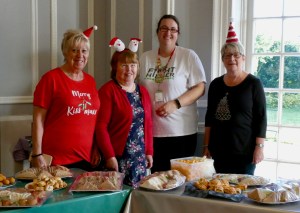
The Reflections elves (Maggie, Pearl and Lynne) had been at work with the wonderful Caroline to prepare the sandwiches this morning. Many thanks to Caroline (the Asda Charlton Community Life Champion) and Asda for providing all the food (except the sausage rolls, cooked to perfection by Lynne).

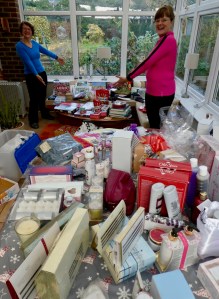
Another set of elves (Janet and Sarah) had sorted all the excellent gifts for our raffle in advance of the party. A huge thank you to everyone who donated gifts. Everyone went home with a gift and the proceeds raised will help our on-going work. Thank you to Dot for organising the selling of the raffle tickets.

The whole team (see the team photo below) arrived early to set up the two rooms…

56 Reflections Friends arrived (another record turn-out), settled-in, had something to eat, bought a raffle ticket, had a chat…

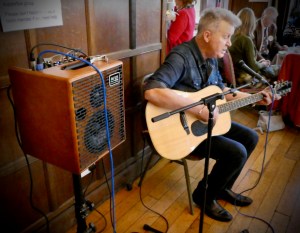
then Tony arrived for his first ever Electric Sing-a-long.

It was loud and proud. There was singing and dancing.

And the annual Twelve Days of Christmas sing-a-long with actions this year (thank you to Richard for finding these) led by Janet, Julie and Pearl.

All too soon it was over for another year.

Merry Christmas from Marc, Peter, Mary, Pearl, Lynne, Janet, Jen, Dot, Julie, Sarah and Maggie.

See you on the 8th January 2019.


Carers’ Group: 10th December

On a cold night at Shrewsbury House, we were pleased to welcome three new members to the group. Each member had the opportunity to discuss an issue that was affecting them. As usual there was a wide ranging and lively discussion.

We started with the issue of anxiety for someone with dementia. The example was of someone continually saying they wanted to go home (even though they were in their current home). Some tips are here.

A member commented again on the enjoyment her mum had found in participating in an intergenerational group – the rather young paired with the rather old. The BBC have recently looked at this in ‘The Toddlers Who Took on Dementia’ see here.

A new member told us about the successful work of arts groups with people with dementia. She referred to the Wellcome Trust’s work ‘Created Out of Mind: shaping perceptions of dementia’ They say: “We aim to reaffirm the value of people living with dementias and their individual experiences. Taking the lead from conversations with people who have dementia, we want to enrich current perceptions and representations of their experiences. And we want to demonstrate the power of the arts in communicating the personal stories and scientific realities of dementia – a more powerful medium than any blood test, brain scan or histogram.” More information here. She also pointed out the work of Arts 4 Dementia. You can see more information here. We hope for more interesting input from this member, as she is studying for a PhD looking at how crafting can help carers and those they care for with dementia.

You might also be interested in an online course covering dementia and the arts, recommended by Angelika (the Greenwich  Dementia Action Coordinator). The UCL course is – ‘Dementia and the Arts: Sharing Practice, Developing Understanding and Enhancing Lives’ – more information here. The online host Future Learn (a private company owned by The Open University) offer a selection of on-line courses about dementia see more here

We heard from another new member about the work Age Exchange in Blackheath does with crafts. You can find out more about their services here.

Our discussions then moved onto behaviour that we may find difficult: anger, refusal to eat/drink/take pills, and aggression. For one carer difficulties had come about because her mother refused to cooperate with a physiotherapist. The issue seemed to be that the therapist wanted to visit in the morning and the mother was not a morning person. Our view was that the afternoon should be tried, as mum really would definitely benefit from some activity. Perhaps the physiotherapist could fit-in with the patient’s timetable, rather than vice-versa. The second example reminded us of a previous session. The individual was talking to ‘someone’ in the mirror, between the ‘two’, they were working ‘themselves’ up to the point of aggressive action. We discussed the need for a review with the specialists, as this sounds like a symptom of dementia with Lewy bodies. More information here.

We discussed the highs and lows of care homes. Fortunately, several of the group have had positive experiences with local care homes. While there is much to recommend, carers need to be mindful that choosing a good home can be difficult. A starter checklist is here.

At the end of the year we encouraged the group to look back and focus on the things that had gone well. It is too easy to concentrate on the negatives but, as we have found from our discussions, each group member has done so much to be proud of in their caring role.

We gave members a handout for ‘Coping at Christmas’ prepared by Tatiana, see here.

This was our last group for 2018 – we wish all our carers a peaceful Christmas.


It may be cold outside, but it’s warm in here

An excellent turn-out in the bleak weather.

We had started Christmas early, thanks to Adrian’s efforts to bring some cheer with paper chains. The arty-types took-up the theme of making something for the festive season.

It all went a bit bonkers at 2pm, when Jamie started his holiday fiesta.

There was singing, dancing and a little shock.

But we managed to get back to normality (almost).

More than a few people joined the dancing.

See you next time.