Carers Group: 13/01/20

We welcomed a new member to the group. She brought up some familiar challenges, but in a new context. Our discussions provided more personal insights, built ideas and options based on experiences, and gave mutual support to a stressed but resilient group of carers.

Visit to a dementia ward

Janet led the session off by describing a recent visit to the Queen Elizabeth hospital to see one of our group members. He had been taken ill on a trip to London, spent some time in a central London hospital, and eventually been found a bed in the QE. The ward lacked any features of interest – lots of white. There was six people in the ward, five of whom had dementia. The sixth person considered he had a role: to keep an eye on everyone else – he was a bit hampered because he could not walk at the moment. Our member was required to lay down or be in a close to laying position, because his very low blood pressure meant raising his head resulted in dizziness and led to collapse. So, he lay in a blank room, unable to move, with limited interactions with anyone. His dementia is quite advanced and his circumstances did not help. He was pleased to see visitors. Janet talked to him and massaged his hands with lavender. After a visit of around 30 minutes of rather rambling comments and slipping not sleep, Janet said goodbye – and he said “Goodbye Janet”. A complete surprise, as Janet had only mentioned her name when she first arrived. Even though he appeared not to be interacting with Janet, she had clearly made a connection. Making the effort to interact and communicate can have great benefits.

Normal behaviour

We revisited the issues arising from a mum, in a care home, who likes to walk about and occasionally picks up things that do not belong to her. The group agreed this was ‘normal’ behaviour for someone with dementia. Unfortunately, and rather inexplicably, the care home does not consider this ‘normal’ and are thinking about asking her to leave or looking at drugs to control her. The position of the home on the boarder of two boroughs has recently caused the home to change to Bromley NHS services rather than Greenwich. Mum’s GP has changed, as has the memory service. It is unclear where this is all going and the uncertainty is upsetting the daughter. Tatiana reminded the group about good practice, including a support strategy with behavioural plan. The daughter will, once again, push for the best support for her mother.

Flying south?

Our new member presented an interesting scenario. Dad had recently become extremely agitated on a bus home. He was distressed by the claustrophobic bus and because he did not recognise any one else there (including his wife). With this background, she then said her mother was planing to take her father back home to see relatives. The trip would include a 12 hour flight and a prolonged drive at the other end. We discussed the pros, the cons and the alternative ways for keeping in contact (including Skype/Facetime). The daughter is clearly in a conflicted position. Our group generally thought such a trip was not a good idea! However, one group member who supported a “last” trip home, was someone who had been born and brought up abroad. As usual, the varied experiences and histories of group members provided a wide perspective of views, ideas, and options.

Pneumonia and Septicaemia

Another mum had recently been admitted to hospital with the above, and survived! The professionals cannot [at the time of the meeting] agree on a care plan. The daughter had been doing 8-hour “shifts” visiting the hospital. When out of hospital mum cannot cope with the daughter being out of her sight. A stressed daughter, is now even more stressed.

Finally, a diagnosis

A wife had got the expected diagnosis for her husband that had been pending for months. Mixed dementia – he does not want drugs – and he has been discharged by the memory clinic. They are expected to just get on with life. This is a common experience. We discussed what this meant and the need to live the best life in this moment.

Thought for today


2020 – Welcome to the new decade

7th January 2020. A new year and quite a few of our group were unable to come along due to illness, hospital appointments, holidays etc,

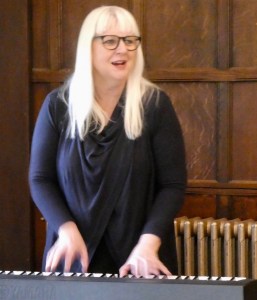
Those that did come were treated to another singing session with the wonderful Emma.

Jamie provided the entertainment in the second half. A dazzling series of consume changes and memorable songs.

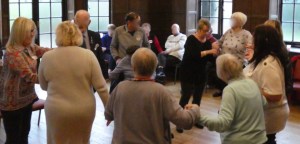
We danced and sang for the rest of the session.

We look forward to welcoming back everyone on 21st of January.


Christmas-ish

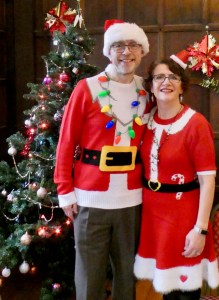
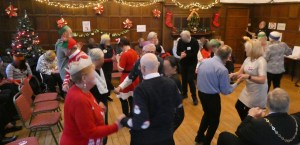
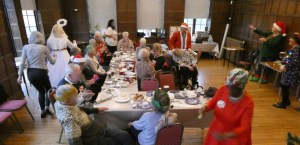
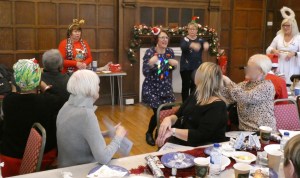
The 10th of December and Christmas returned! Some of us dressed for the event (you can’t buy style).

Janet and I wished everyone all the best for the festive season.

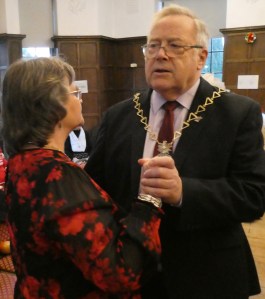
The Mayor (Mick Hayes) and Mayoress (Gillian) joined us – left their walking sticks and joined in the dancing.

Tony was in top form, as usual.

The dancing continued until it was time for home.


Best wishes for the New Year from all Reflections volunteers and trustees.


Carers Group: 9th December

We had a full session discussing a variety of subjects.

Behavioural issues

A carer’s wife had become increasingly reluctant to wash and change her clothes. She is reluctant to go out. Other group members had similar experiences with their loved one. Techniques were suggested such as: running a hot steamy shower to entice use; using dry shampoo; finding someone who the person is sufficient relaxed with for personal care. This led to other examples – while it was difficult to get one person to leave home, it was even more difficult to get then to return – they said “It’s not my house. Why would I go in there“. A very reasonable argument, when you do not remember living in the house in question. Another example was someone who would not have his hair cut. This was not completely true – he would only let one person cut his hair – this did not seem unreasonable.

Transition to a Care home

A group member had achieved agreement that her mum would continue to be funded under the Continuing Care arrangements. Her care home was good, but mum did not like any changes which gave rise to stress all round. Mum’s avoidance of change also meant that a when her daughters faced the test of clearing her house, they also had to deal with all their father’s belongings – he had died several years ago, but everything had been kept.

Hair care and a mattress

A group member, who continued to try to come to terms with the difficulties her husband is facing and the changes to their lives, gave us some interesting examples of change. He is keen to be tidy and his OCD coupled with dementia has led him to tidy a wide variety of household items. When his mattress needed to be moved, there was a big reveal of all the items that had gone “missing” in recent weeks. He is also keen to ensure his hair is in good order, so he will use anything in a spray can for the job. Another example of someone’s logic being quite reasonable, but the solutions are a little unorthodox.

Who’s in the mirror?

Two members have loved ones who believe pictures move, the television is real, or that they have a friend who lives in the mirror. Their Lewy bodies dementia is fascinating, can be working and/or reassuring. You can read more on the NHS web site here.

We also reviewed many of the issues we have discussed in previous sessions. Tatiana’s handout, from last year, on coping with Christmas was snapped-up by group members. It is here.

See you in the New Year,


Viki and Emma return to sing

26th November – Christmas is approaching rapidly.

Emma started us off with some group singing-in-the-round. Popular as ever and a very seasonal sound.

There was an elf in every room to ensure elf and safety.

Viki raised the temperature, encouraging us to dance and interacting with members. A full-on delightful performance.

We all joined-in with the fun.

Tina came along to present us with a very generous donation – our second from the Kent Spiritual Teaching Group (the KSTG Facebook site is here) – thank you so much!

Next time… The Reflections Christmas Party.


Christmas Reminiscence

Our second Christmas Reminiscence session (you can see the first here).

We had brief discussions on childhood and adult Christmases past – times were tough for most of our group.

Fortunately, we had elves and an angel on hand to spread good cheer.

We also had some mementos of Christmases past.

Our nibbles and crackers were popular.

Father Christmas, and his helper, popped-in with presents for everyone.

Then Janet led a Twelve Days of Christmas sing-a-long. This was followed by hotly contested Sprout and Spoon races.

A very jolly Christmas indeed.


Jamie’s American Adventure

On 12th of November Jamie returned to entertain us with some favourite tunes from the USA.

There was Carmen Miranda…

and someone else from the South Seas! Jamie’s ladies always seem to raise the most laughter. He had 13 costume changes (mostly men!) and sang a great variety of splendid songs.

We were packed, as usual. Thanks to everyone who came and joined in the fun.


Carers Group: 11th November

We welcomed back our carers from their month off. Two of them had enjoyed their holidays – but a couple had been stressed by bad news from home. The others had mixed fortunes too.

Behavioural issues

One carer said her mum was quite content in her new care home. The home had raised an issue about the mums persistent walking around and her tendency to pick up things that did not belong to her. The group’s view was that this is what people with dementia often do and they were surprised that the care home had considered this a problem they might not be able to deal with. Someone from the memory clinic had attended the home and prescribed “something to calm her down”. Tatiana pointed out there should be a chart of behaviour, appropriate behavioural interventions, and record of both what happened and what was the result. The carer will feed back to the group on developments.

Our second contributor told us her mum attends a day centre for vulnerable adults (not dementia specific) four days each week. For a few weeks mum has become upset, anxious and cry in the afternoon. There have been no changes in medication or procedures which might have caused this change in behaviour. Following a group discussion the issue seemed to be related to the arrangements for taking people home. Mum went on the second bus, which meant she saw lots of people leaving the centre – it appeared they were leaving her behind. Leaving her behind/alone was also an issue for the daughter when she visited her mum at home – every time she got ready to leave her mum became upset. In the case for the care home the group thought her mum might be able to come home on the earlier bus, or be in an area where she would not see others leaving the centre. Leaving her at home was managed by distraction. Both situations were causing the daughter stress and guilt. The group were very supportive as they were very familiar with the difficulties and the emotional reactions.

Another carer said her husband’s treatment at a care home had been a concern. A member of staff considered his behaviour to be a problem. This resulted in the husband being put on medication. Fortunately, a new doctor and support team had stopped the medication and were working well in managing his behaviour.

Travel

A group member had managed an extended break for the first time in a long time. He visited his son in the USA. His wife could not travel so he had arranged for her to be looked after by a live-in carer from Bluebird. It worked well! 

Seizures

The same member’s wife had recently started to have seizures. He said this was something that was more common in people with advancing dementia – which was a surprise to some of the group. You can find more information here.

Hospital problems

A highly stressed couple had finally managed to arrange a two-week break. In the second week mum was admitted to hospital with anaemia and a shadow on her lung. After three weeks those issues had been happily resolved. However, mum was kept in bed for those weeks, without any exercise. As a result she had progressed from having difficulty in walking to being unable to stand. Now at home, there was problems with carers not turning-up. Mum now slept downstairs and her daughter was looking into finding a suitable adapted car to get mum out.

The husband had positive comments about the Queen Elizabeth dementia ward. One concern was that a doctor spent time explaining the patient’s condition to them, (apparently) without realising that people with dementia cannot necessarily remember everything you say.

Ambulances and non-urgent ambulances

A wife called an ambulance for her husband. They arrived, did all the checks and said they could not take him to hospital, as he was not an emergency case. They called a non-urgent ambulance. This crew arrived and carefully copied all the information the first crew had taken. They then took him to hospital. You may be interested to read the London Ambulance Service definitions of Emergency/Urgent/Non-urgent – apparently written for confused GPs! – here.

Counselling

A carer had finally concluded that she could benefit from counselling. Others recommended “Time to Talk”. You can read about their service here.


See you next time,


Tony’s Happy Halloween

We enjoyed a spooky afternoon with our most regular entertainer…

… young Tony. Who was as popular as ever

There was the usual dancing. A couple of our new members have taken the energy level up several notches – they must be taking some very good vitamin pills!

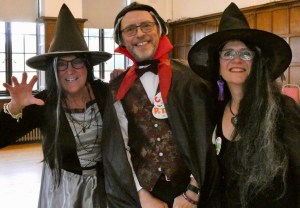
And we volunteers joined in with a spell of seasonal silliness. It was a fun afternoon.


Birthdays and Celebrations Reminiscence

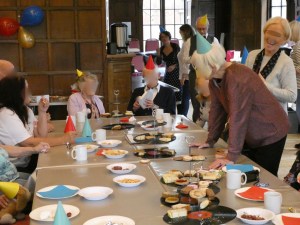
We had a busy afternoon – celebrating.

Several members of the group pointed out that there was little to celebrate when they were very young – there was a war on! However, they managed to tell us about, and enjoy again, some of their happier times.

We played some games they played with children and grandchildren – like pass the parcel

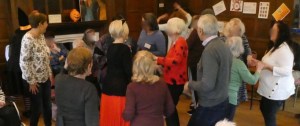
and an energetic ballon game.

At the end we had a go at pin-the-tail-on-the-donkey. With thanks to Richard for the donkey.

It was another engaging session that brought out many interesting stories from our group members pasts. Several anecdotes helped members made connections with others in the group.

Next time it will be Christmas in November!