Happy Birthday Us!

The Reflections Friendship Group was two years old today. We have had a wonderful time and met some delightful people. Thank you to everyone for making the group the success it is. We are looking forward to another year of people arriving as strangers and leaving as friends.

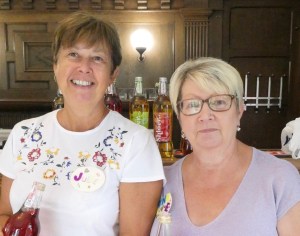
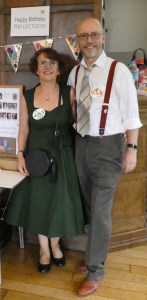
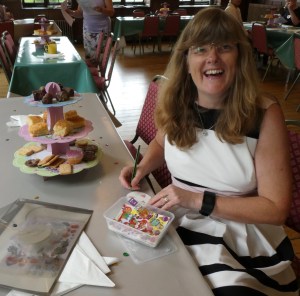
Here are a few snaps of some of our super volunteers and a couple of our trustees at the group today.

Dot, Marc, Maggie and Jen

Julie and Lynne

Janet and Peter

Sarah

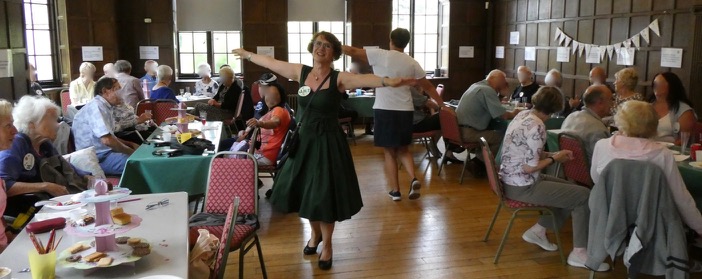
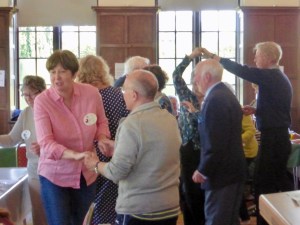
After cakes, fizz, singing and a little dancing, Julie and Janet demonstrated synchronised flying…


Carer’s Group: 9th July

We discussed how to cope with family members who, for whatever reasons, are unwilling to take an interest/share the workload caring for someone with dementia. This is clearly a very difficult area. The group suggested a little education can help understanding and may prompt some participation in care or just greater contact.

Food preparation can be an issue for someone with dementia living alone. There was broad support for the use of pre-prepared frozen dinners. The Wiltshire Foods service was suggested as a supplier. For information their web site is here.

Two people at the group have spouses in The Meadows. However, their experiences have been somewhat different. They were able to compare notes and consider the best way to cope with managing their care home experiences. If issues do arise, then there was agreement that the care home manager should be contacted.

There was a similar divergence of experience in using the local advocacy for older people service. Some experiences had been very good, others not so. Information their web site is here.

We discussed how to cope with someone who becomes aggressive. This led onto questions about how do you know when it is the right time for someone to go into care. The group agreed it was best to stay at home as long as possible, so that required an understanding of the support services available and funding issues arising.

We discussed funding care and how some people may be eligible for continuing health care. The NHS has guidance which sets out the principles and processes of the national framework for NHS continuing healthcare and NHS-funded nursing care. You may find it here.


Information update

Understanding Dementia On-line Course

We have signed-up to do this course. you might be interested too. Understanding Dementia is a Massive Open Online Course (MOOC), offering university-quality education about the latest in dementia research and care. This free course provides an opportunity to engage with the perspectives of an international community, without requiring exams or assignments. Why not consider signing up for a MOOC profile and follow the prompts to enrol in the course – see here.

Friendship Group meeting on 24th July

  • Jamie, the quick-change singer, will be back with us following his very popular first appearance. Don’t miss it.
  • There will be Free Blood Pressure Checks (for those who want them). This service will be provided by Live Well Greenwich – more information on Live Well here.

Friendship Group meeting on 7th August

  • Tony, our much loved singer, will be back for another song and dance session.
  • The local Fire Brigade will be with us for a short presentation about fire safety – and they will stay for chats to small groups at the tables.

Hook and Loop Dartboard

We are always on the lookout for fun ways to interact with a person with dementia. We spotted this hook and loop dartboard in the current Lidl leaflet.

It is great just to encourage activity by throwing the balls or using numeracy skills to add up the total thrown with the 3 balls.

We bought a similar one for our group from Decathlon for £4.99 but this one, which is the same size,  is a bargain for £2.49. It will be in Lidl stores this week from Thursday 12th July.
The nearest Lidl stores are Eltham and Sidcup.

We’re having a heatwave

Tony was with us this week, courtesy of funding from Music in Hospitals and Care. Despite the heatwave, we had lots of dancers and a few singers.

I’m sure his rendition of “Ring of Fire” was fuelled by the fact that Tony appeared to be melting in the heat.

Next time we meet it will be Reflections’ second birthday – there will be a party!

Crumbs! – wot a sing-a-long

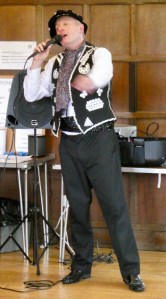
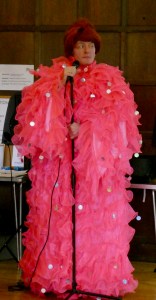
Tuesday 12th was a great day for entertainment. We had the first visit of the delightful Jamie Steen.

He delivered a variety of popular songs in a dazzling series of costumes.

Our audience loved his performance – they were singing an dancing as usual – and we have booked him again!

Everyone will just have enough time to get their breath back before he returns on 24th July.

Carers’ Group: 11 June

We had a detailed discussion of carers’ issues as usual. The group session ended with a presentation:

Department for Health and Social Care – Carers Action Plan 2018 – 2020   Supporting carers today

In the Call for Evidence for this Plan, 89% of the 6,275 participants who responded to this question felt strongly that it was important adult carers received better services and support in future

The Plan sets out the cross-government programme of work to support carers over the next two years. The five priority themes are:

  • Services and systems that work for carers.
  • Employment and financial wellbeing.
  • Supporting young carers.
  • Recognising and supporting carers in the wider community and society.
  • Building research and evidence to improve outcomes for carers.

Actions are detailed under each of the five priorities and it is intended that the action plan will improve the health and wellbeing of carers and support a better experience for them. The Government has said that it will seek to understand the extent to which the actions help to:

  • Increase the number of employers who are aware of caring and the impact this has
  • on their workforce.
  • Support health and social care professionals to be better at identifying, valuing and
  • working with carers.
  • Improve access to appropriate support for carers, including respite care and carers’
  • breaks.
  • Improve the evidence base on carers to inform future policy and decisions.
  • Ensure that the needs of carers are recognised in relevant government strategies.

The Plan is part of wider government action on social issues.

As part of the programme of work on implementation of the Dementia 2020 Challenge:

  • NHS England is working to ensure that GPs are playing a leading role in ensuring coordination and continuity of care for people with dementia and their carers.
  • Skills for Care (SfC) is working in partnership with Health Education England (HEE), Alzheimer’s Society (AS), and Association of Directors of Adult Social Services (ADASS) to ensure that people with dementia and their carers are supported by health and care staff that have undertaken appropriate levels of dementia awareness and training.
  • The Department of Health and Social Care (DHSC) is working with the Dementia Action Alliance to increase the numbers of hospitals who have signed up to the Dementia Friendly Hospitals Charter and to explore options for increasing the number of volunteers in hospitals to support people with dementia.

In addition:

The Department of Health and Social Care and Research in Practice for Adults (RiPfA) will support implementation of social work practice guidance with carers with Principal Social Workers and Carers leads.

The government says it recognises there is more to do and that is why the needs of carers will be central to the forthcoming Green Paper on care and support.

The Plan is available here

Reflections in May

A busy month!

We ran three Friendship Groups in May. Young Tony came along to sing to us as usual. Janet started a new seated exercise session, which was very popular indeed – more of these to come. We had the usual quizzes, aqua painting, dominoes and lots more.

Our regular monthly evening Carers’ Group had us talking about the issues of the day for carers. There was a lot of discussion on how to safely plan a trip away for elderly people who have memory and other issues. As ever the group was mutually supportive and came up with many ideas.

Janet and I spent two days at Oxleas early in the month. The first day was an awareness event, where we had the opportunity to speak to a variety of people with a recent diagnosis and their carers. The second was a chance for us to meet the latest Cognitive Stimulation Therapy (CST) group, have a chat, and invite them to move on to out Friendship Group.

Over five days I addended an introduction course, then started as an “apprentice”, as part of the latest Remembering Yesterday Caring Today (RYCT) group in Woolwich. For more information on the 10/12 weekly themed reminiscence sessions see the comprehensive web site here.

Towards the end of the month I was very pleased to run my 33rd Dementia Friends session. Thanks to Bob the (website) builder for arranging the event. I have now presented to over 700 people as my contribution to the 2.5 million Dementia Friends. If you want to know more about Dementia Friends, please contact me or visit here.

Janet and I then attended the innovative Dementia Action Week event in Woolwich library on the 24th. Angelika had set up a Dementia friendly Street with the help of Richard and the other library staff. The “street” included businesses and services across the borough which have received recognition for being dementia inclusive. There is more about what Greenwich is doing to become a dementia friendly Borough here.

Finally we popped along to the Park Avenue Care home on two days, to sample their entertainment. We were so impressed by one of the singers, Jamie Steen, that we booked him on the spot to perform at our Friendship group. More about Jamie here.

Enjoy the sunshine.

April 17th: Singing and sitting

Another fun afternoon. The sun was shining and a packed room enjoyed Tony’s sing-a-long. He is always popular and there was lots of singing and dancing.


We also launched a guided seated exercise session in our activity room. It was lovely to see that most of the group wanted to join in. As it was popular, we will run it again next time on 1 May.


Dementia Dilemmas

Supporting someone with dementia and the way the illness presents for them may mean at times you will be faced with moral dilemmas as you try to keep the person on an even keel, as well as feel safe and respected, and so you do what you feel is best.

With all decisions, like a lot of things in life, there is no right or wrong answer other than to do your best at the time taking into account your knowledge of the person and what you feel is right at the time.

Telling what can be considered a therapeutic lie might be considered kind and in the person’s best interest at the time but is it ever right to lie to someone outright? How would you feel if someone lied to you? Would you feel it is acceptable?

It is worth bearing in mind that for a lot of people with dementia awareness can vary so if you say something and it is clearly a lie then they may remember on another occasion that you lied to them and this may mean they get angry with you and the trust you have may break down. As we know from the ‘bookcase model’ feelings remain even if the event that triggered the emotion has been forgotten.

Another alternative is to bend the truth. If you are not asked a direct question then you can be selective about how much you say. If you are asked a question outright such as is my mum dead, then you have a choice of answering the question truthfully or redirecting the conversation.

Some examples:

Where is my Mum/Dad? They said they were coming to collect me.

There is no easy way of interpreting what is going on here other than your personal knowledge of the person. There is a lot of thought which says if people are asking for their parents then they are feeling insecure. When we think of parents, if we have been fortunate to have been brought up in a supportive environment then if we think of our parents we think of love, and security. However, it could also be the case the shelves on the bookcase have fallen to the point where the person with dementia believes they are at an age where there parents will be coming for them.

So how might you respond?

  • You could tell them outright your Mum or Dad is dead. They might respond by saying “oh yes, I forgot” or they might get upset and say ‘I didn’t know, why didn’t anybody tell me?” which will mean you will be comforting someone who is upset. For some people they cannot retain the information so each time you tell them their Mum/Dad has died, you may be bringing up feelings of grief and upset.
  • You could ask the person how old they are, and then depending what they say ask them if they think their Mum/Dad is alive? Here you are testing out their ability to reason and reach a logical decision. This may be variable working sometimes and not others.
  • You could ask the person with dementia how they are feeling and maybe is there something specific they want to talk to their Mum/Dad about so perhaps you can help.
  • You could start a discussion about the Mum/Dad. You could say something like “I was thinking about them the other day. Do you remember when… “and come up with some past occasion. This may prompt a conversation about reminiscing and you are steering the conversation hopefully into a happy area.
  • The person might say they are worried about their parents. You could reply that they are safe and there is no need to worry. This is bending the truth but is not a direct lie.
  • You might say your Mum/Dad is at work/ too busy to come right now. This would be a direct lie and you may be found out.

What is the matter with me? I can’t remember things. I used to have a good memory?

How you respond will either open up or close down the opportunity for conversation.

  • You could say you are fine. There’s nothing wrong with you. This would be a direct lie and is shutting down the conversation. Perhaps you find it difficult to talk about what is happening. This however, may be an opportunity to open up a conversation and help the person with dementia talk about their concerns for the future. This could enable them to plan so they live their life based on their values and wishes not those of other people.
  • You could ask “what makes you say that?”.They might tell you how they feel. If you know from previous conversations they have not wanted to hear the word ‘Dementia’ then you could reply saying they have problems with their memory. Whilst this is bending the truth, dementia is more than a problem with memory, you are opening up the conversation and it is still enabling the person to talk about their concerns. It is also worth bearing in mind people can change over time. So whilst initially they may not have wanted to talk about things, later on they might.
  • If they are happy to talk about dementia, then you could say “you have dementia, but you are coping well and I am here to help you so try not to worry”. Your knowledge of the person will help here.

When are we going home?

This is usually a sign that the person is not comfortable in their environment. It can happen when the person with dementia is out on a visit because they feel the need to be in the security and familiarity of their own home or they may be at home and no longer recognise it as their current home. Someone may have lived in their home for 10 years but if the shelves on their bookcase have fallen off beyond this, they quite likely will not recognise their current home.

  • You could say, if you are out on a visit, “we are not going home yet why don’t you have a look at x’ and give them something to try to distract them or start having a conversation with them.
  • You could ask them where is home? Where do you need to get to? Who will be at home now? This will help you determine what period in time they are thinking about and you can then perhaps reminisce about that time perhaps with music and photos.
  • You could say if you live at home, ‘you live her, this is home and you have lived her for x years. This is your home’. This may be the truth, however this is not reassuring to the person with dementia and may provoke feelings of frustration and anger at not being listened to which you will have to deal with. This can particularly happen if you are preventing the person from leaving the house and they feel locked in. You must always be safe so it may be necessary to be prepared to leave the house with them. Hopefully after a walk they may have forgotten about “going home” and you can suggest you both return home.

These are just some examples and you may be presented with others. Each situation will require a response and each response will present a reaction. Whatever you decide, choose not to feel guilty about the decision you make if you are making the decision in the best interest of the person with dementia. Having feelings of guilt will not be helpful to you and nor will they help the situation.