We are all precious – The GEMS®: Brain Change Model

Dementia care expert Teepa Snow suggests a fascinating model to explain the stages of dementia. Teepa’s GEMS™ revolves around remaining abilities rather than capacity losses.

Watch Teepa explain the GEMS™ model here.


Read her detailed explanation of each precious stone and their attributes here.

The GEMS™ model uses sapphires, diamonds, emeralds, amber, rubies, and pearls to help us better understand people with dementia, their behaviour and how we might choose to respond.

It is a hopeful and helpful perspective on the disease and those who live with it and it provides a framework in which we can support and encourage people with dementia to live enriching lives until the end.

The analogy of a pearl in an oyster shell to describe the last phase of life with dementia is especially beautiful and fitting. Teepee says “If what you think you see is an ugly shell, remember to look deeper: the most important thing is what’s inside.”

Thank you to Seeking the Good Life, a carer’s blog post we follow, from who we learnt about this inspirational model here.

Tuneful Tony strums and sings some special songs

Back again, by popular demand, Tony gave us another excellent afternoon of entertainment. There was plenty of singing-a-long.


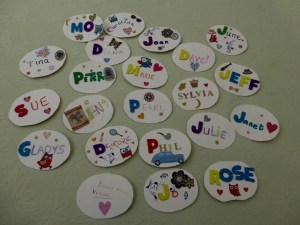
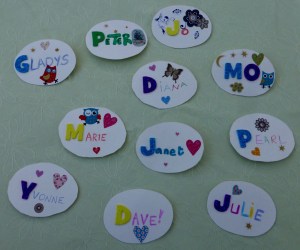
The badge making continues – they are all individual. What a creative group of people we have!

And finally. A really big thank you to Ellie and the Thorntree school dancers for a cheque for £206 for the group and thank you Sally for collecting it from the school. We will make sure the money is spent wisely.

It’s a shame I couldn’t be there to join in the fun. I hope to see you soon.

Return of The Archers 18 April

We were pleased to welcome back archery coach Marc. Archery was again very popular. With help and support everyone who wanted to, was able to have a go.

Other usual activities – bingo, dominoes and knitting also took place.

We were also pleased to welcome back Ellie. She had come along with her classmates on 7th March (see blog here) to do a sponsored dance routine, which she had choreographed. She announced the money is still being counted, though believes they have raised around £207 – which is wonderful.

I shall be taking a short break and hope to be back at the group in the not too distant future.

Janet and the team look forward to seeing you on 2nd May, when singer Tony Martin will be returning.

Carers’ Group – 10 April

There were 8 carers at our second meeting including one new lady who commented after, the group was great and what she had been looking for, for some while.

Issues raised and discussed by the group tonight were:

Care homes: If the person with dementia is in a care home, is it reasonable the family is called and expected to still take the person to medical appointments?

In the case of someone who has behaviours we may find challenging, is it person centered for the home to want the person taken off site to do a  blood test rather than ask one of the on site nursing team to do it?

Carers 

Recruiting carers privately – Where does one look? The importance of ensuring anyone employed is checked via the disclosure and barring service.

The importance of regular carers attending to a person with dementia so a rapport can be built. It was recognised this can be a challenge for a care agency though the number of people involved in care should be kept to a minimum.

Recognising that political correctness may not always apply to the person with dementia as the over riding importance is they get the support they need.

Protecting the world of the person with dementia –  Managing the relationship between the family, the person with dementia and social services so the person with dementia is involved and engaged in the decision making process. Social services has a duty to see the person they are supporting. If the family think a conversation with social services or other health professional may cause distress, to communicate their concerns so an agreed approach can be found.

Carers Toolkit – The group discussed 20 things not to say or do to a person with dementia as identified by Kate Swaffer who was diagnosed with young onset dementia. Read the article here.

The next group meeting is on Monday 8th May.

We look forward to seeing you next time.


Janet & Tatiana


Archery – a great success

28 Friends came along on Tuesday and by all accounts the soft archery set was a real hit. Thank you to archery coach Marc – our own Errol Flynn of Sidcup – who gave his time to come along and provide tips and guidance. By all accounts at one point there were more people watching the archery than doing anything else. We are really pleased it was so popular.

Thank you to Caroline for once again donning her bingo callers hat. Another popular activity.

A big thank you to the Reflections Team who ran the group in the absence of Janet and myself. You really are stars!

The Easter raffle was well received and raised £31 for the group. Thank you to the team members for donating the prizes.

It is encouraging to see from the feedback sheets that everyone enjoyed the group meeting. There were requests for more singing, dancing, activities and crafts so we will look into providing more of these for the group.

By request we are pleased to announce that Marc will be available again on 18th April to provide archery coaching. We have bought another bow and a couple more arrows so people should be able to have more goes.

Lastly, thank you everyone for my card and good wishes. It was very thoughtful and much appreciated.


Carers’ Group meeting 10 April

The second meeting of our Carers’ Group is tomorrow night, 7:30pm, at Shrewsbury House.

We look forward to welcoming back those who came last time and meeting new people. Details of the group may be found here.

We will not be able to entertain any people with dementia this time, as Julie and Marie are not available. They should be back next month, so places can be booked for then.

The Flower of Emotional Needs

The Dementia Friends badge and logo is a forget me not. What is it’s significance?


Tom Kitwood (1937-1998) identified a number of fundamental psychological and social human needs. These human needs have to be met for us all, in order to maintain a good sense of well-being. He developed the idea of person-centred care.

Kitwood’s model, shows that when caring for, and supporting people with dementia, we must remember six psychological needs: love, comfort, identity, occupation, inclusion, and attachment.

Everyone has these needs and when we care for someone who is living with dementia, we need to ensure that we take the time to fulfill these needs and be very mindful of them.

Love

Everybody needs to be loved and to love someone; being loved and accepted is part of our need for survival, from when we are born. Love can range, from loving a person, an activity, a favourite meal/food, to loving God and feeling self-love.

Comfort

Feeling comfort is our need to be warm, dry and clean, having a full stomach and not feeling thirsty. Comfort also might mean to have quiet when we want or need it, to be free of pain, to have the freedom to move, and to have a sense of closeness, being able to bond with others.

Identity

We all have the need for personal identity; from the clothes we choose to wear, the food we prefer, and the way we like our hair. These are all identifying factors that help us and others identify with who we are.

Occupation

Most of us want to be occupied with something to feel like we have worth and purpose in life. From being involved in daily activities, to engaging in a planned activities programme it’s important that the person is able to occupy themselves with meaningful things.

Inclusion

Inclusion means that we want to be a part of something. If we feel left out then it makes us feel bad. People living with dementia may lose track of conversation easily, being mindful of their feelings of inclusion is important.

Attachment

Our connections in life are also crucial to our feelings of well being. Everyone wants to feel connected to something, or someone; often a combination of both. We also have a need to form wider attachments in our community, or in groups.


Thomas Kitwood, born in Lincolnshire was a pioneer in the field of dementia care. He completed an MSc in the Psychology and Sociology of Education at Bradford in 1974. Since then, he developed innovative research and training that was challenging the culture of care at the time. Kitwood wanted to understand, as much as possible, what care is like for the person with dementia. His major innovation to achieve this goal was Dementia Care Mapping, a method for observational evaluation of the quality of care that is provided in formal settings, such as care homes, or home care providers.

Kitwood founded the Bradford Dementia Group, University of Bradford, in 1992. He firmly believed that viewing people with dementia in purely medical terms, leads them to be seen as objects and as having no subjectivity or personhood. His specific ideas relating to person-centred care developed positive approaches to people with dementia which are discussed in his book Dementia Reconsidered: The Person Comes First


Article adapted from Tracy Steel 9/2/16 here


21 March: We all pat the dog! Loren and Bea pay us a visit

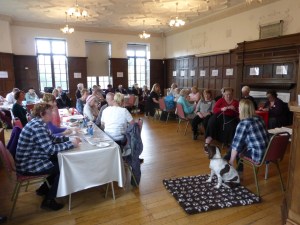
We had 29 people, 8 team members plus Loren and 1 dog, lovely Bea.


P.A.T. dog

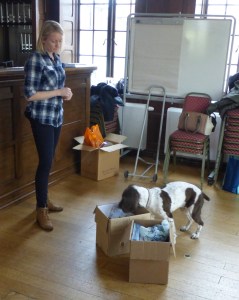
We thought we had a dog coming for a pat. However, the group found out Bea was no ordinary PAT dog and is a highly trained retired sniffer dog. Bea had been trained by the police to search for drugs and money. We were treated to a demonstration of her skills. She managed to find a £50 note hidden under a box with no trouble, after a little play acting to the audience. All the group patted Bea and some Friends gave her treats. Thanks to Loren for the interesting chat and bringing the lovely Bea.

Knitting and Nattering

Pearl started the all-new-knitting bee today. The aim is for each knitter to produce squares. The squares will be joined together to produce a blanket which we hope to donate to an animal charity. I asked if they could knit me a pullover, but they said they were too busy with the squares.

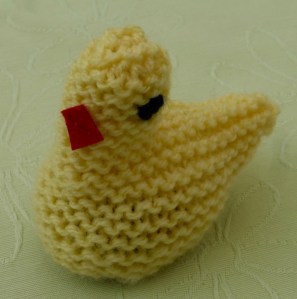
Thank you also to Pearl who donated a chick she had knitted, with a hidden chocolate egg in the body. We plan to hold a raffle next time and this will be one of the prizes.

Bingo

Caroline provided another entertaining game of bingo as well as donating some more bingo prizes. Thank you Caroline.  I think she has found her vocation and we are pleased this is becoming a regular feature.  Thank you also to Pearl for sewing the covers for the emery boards that Janet had bought on behalf of the group, as bingo prizes.

Badge making

Some people took part in badge making organised by Julia and Maria who cut out the badges. Those who didn’t make a badge this time, will have the opportunity to make one in future, if they wish. They are all unique and look great.

Oral history

June ran her second interview session this week. It is great to see June’s confidence in interviewing going from strength to strength. This week she interviewed Jeff. I believe they both enjoyed it. With a bit of support in the preparation it is so lovely to see what someone can achieve and is so good for their self esteem. Further interviews with other members of the group are planned.


See you on 4th April, when you can try out your archery skills and maybe win a raffle prize. Good luck everyone.

Carers’ Group Launch – A great first night!

It was lovely to be able to provide a place where so many carers felt comfortable to share their personal and emotional stories with the group. Everyone had the opportunity, as agreed in our group contract, to share what they wanted without interruption.

There were 10 carers who came, 6 of whom are at work during the day and could only attend an evening group.

Reflecting on the conversations last night a number of themes emerged for future discussion:

  • Following a recent diagnosis – what information do other carers feel would be helpful?
  • When someone with dementia forgets your name – why is this important to you?
  • Long term caring at home – what are the challenges and tips?
  • Isolation when the carer’s family is far away – where can they find support?
  • Small pieces of information can really help – eg personalised blister packs of tablets, free incontinence pads.
  • Remote caring – how, appropriately used, CCTV can help.
  • Avoiding conflict by using distraction techniques.

We also covered some specific topics:

  • Entering the reality of the person with dementia, rather than trying to force them into ours.
  • The book Case Analogy [see here]
  • Not focusing on the “Black Dot” of dementia: don’t let the diagnosis overshadow your perception of the whole person and their life.
  • Carer coping strategies: Gratitude journals. [see here and here]
  •  The science of focusing on looking for the positive things in the day eg the bus came on time or the sun was shining; to help with well being either by writing it down or thinking about it before you go to sleep.
  • The use of Alzheimer’s Society Talking Point in helping to reduce social isolation and get help and advice [see here]

The discussions reflected the point: “When you’ve seen one person with dementia, you’ve seen one person with dementia”. Everyone is different and reacts differently to their dementia.

It was lovely to see so many stay behind, for the optional half an hour from 9 until 9:30 to have a chat with each other and us.

During a discussion with Janet, Lorraine mentioned Sea Quest a game project by Alzheimer’s Research UK to help defeat dementia. The video on the website is beautifully animated and worth a watch. Lorraine is a remote carer and is using using the idea from the game of creating new memories to buy a small gift for her Mum each time she takes her out to help her connect with the memory. You can see the video here.

Thank you Ann for your feedback “ Thank you. It said on the leaflet I would get a warm welcome and I did.”

By prior arrangement, one person with dementia came along and was entertained by Julie and Maria, Friendship Group team members, while their partner came to the group. They did colouring, played snakes and ladders, and even did a bit of singing. Everyone said they really enjoyed themselves.

We were pleased people said they want to come back.

We look forward to seeing you at out next Carers’ Group meeting on Monday, 10th April.

If you have any comments you would like to make about tonight’s group meeting, we would love to hear them


Janet, Tatiana and Peter

Note: We are aware some people who attended do not use the internet so we will have copies of this blog at the next group meeting.

For a wealth of information on dementia check out the Alzheimer’s Society Publications and Factsheets [see here]

A visit to the dentist: how to get it right

Dental hygiene is important for everyone, but can be a challenge for someone with dementia. Dementia friendly dentists are available and, under NHS guidelines, are given longer to deal with someone with dementia. For more information on Dental treatment for people with special needs click here.

A friend who is supporting her mum with dementia, who lives in Bromley, shared with us her recent experience of taking her mum to the dentist –

“For a several years visits to the dentist have not been good.  As soon as the chair was tipped straight back Mum would start to panic, wave her arms and legs around and make a lot of noise.  The dentist barely looked in her mouth, would sit her up and say good girl, off you go!  Previous to that, she would get very panicky with the sucker and water squirting thing in her mouth if she had to have a filling.

I found a new dentist, though was still dreading taking mum, but:

The dentist was amazing. In fact, all of the staff made a fuss of Mum. The dentist made friends with Mum gave her lots of compliments and sat down and chatted with her. There was no rush at all. She explained what she was going to do and got Mum really relaxed.  She did a good inspection and two x-rays. Prescribed some special toothpaste and we were asked to come back on Friday to see the hygienist. The dentist said if Mum does not like it then she can stop it whenever she has had enough and not to worry about it. She really was a lovely dentist – I want to change to her!!!!

So, as we left, Mum said to her this is a really nice place to come and get my hair done – everyone just smiled happily at her. On the way back to the car she said well that is definitely the place to come and get your eyes done and then as we got home she asked if those people in the waiting room were all waiting to see the vet!!!  When I left her she said she had enjoyed her afternoon and we must do that again. I think we can safely say it was a successful visit to the dentist.

On Friday, the second trip to the dentist was a rip roaring success too!!  I just can’t believe how well this all went. I was unable to park so close so had to use the wheelchair as soon as I arrived on the front path a nurse was out to assist. She took Mum in leaving me to deal with the chair. The waiting room was very busy and she got Mum seated and was chatting to her. She said that the hygienist was running late so we sat for about 15 mins during which time Mum wanted to know if everyone was waiting for the vet.

The hygienist was absolutely brilliant with Mum. She sat and had a chat to her told her what she was going to do and asked if that was all ok. I had warned them what would happen if the chair was tipped back too much so she took it back a little way and asked if that was ok and Mum said it was. She then asked if it could go back a little more and Mum agreed. This happened several times until Mum said could she come back up a little and that was not a problem. When the hygienist was happy that Mum was completely ok she had a look in her mouth. She gave Mum lots of praise for the way she has looked after her teeth and then told her what she needed to do. Rather than use the whirring water dispensing equipment she descaled them manually very slowly and very gently. Mum was so relaxed. After the descaling Charlotte explained that she would like to clean/polish Mum’s teeth. She showed Mum the brush switched it on so she could hear it, explained what the paste would taste like etc and Mum happily agreed for her to do it. I was completely amazed. Brilliant. After we got back in the car Mum said she was really nice, but she didn’t do much to my feet!

So going to the dentist can be that good.”

If you have any experiences of the dentist, please do share them.